


In addition to the unique problems and questions that constitute its subject matter, philosophy makes use of a variety of intellectual tools and argumentative strategies that are widely applicable to both academic and informal inquiry. This course helps students develop these resources through a careful analysis of exemplary pieces of philosophical argument and literature. To this end, we explore philosophical thinking about modes of reasoning as well as such core philosophical topics as the existence of God, the nature and limits of knowledge, the nature and content of ethics, and the mind's relation to the world. While the course emphasizes the cultivation of the tools and strategies of reading and argument, the materials encourage reflection on some of the foundational characteristics and assumptions in the disciplines of ethics, religion, and philosophy itself. Readings may include Plato, Aristotle, Aquinas, Leibniz, Voltaire, Locke, Mill, Hume, Kant, Camus, Descartes, Kafka, Nietzsche, as well as more contemporary authors such as Le Guin, Hursthouse, Vargas, Gyekye, Beebee, and Ismael.
Course Number
OCRA1
Level
High School
Period
P2 Monday/Wednesday 07:15-08:30
P3 Monday/Wednesday 08:30-09:45
P4 Tuesday/Thursday 09:45-11:00
P7 Monday/Wednesday 13:30-14:45
P7 Tuesday/Thursday 13:30-14:45
P9 Tuesday/Thursday 16:00-17:15
P11 Monday/Wednesday 18:30-19:45
P11 Tuesday/Thursday 18:30-19:45
Semester
Year-long
Credit per Semester
5.00
Subject
Prerequisites
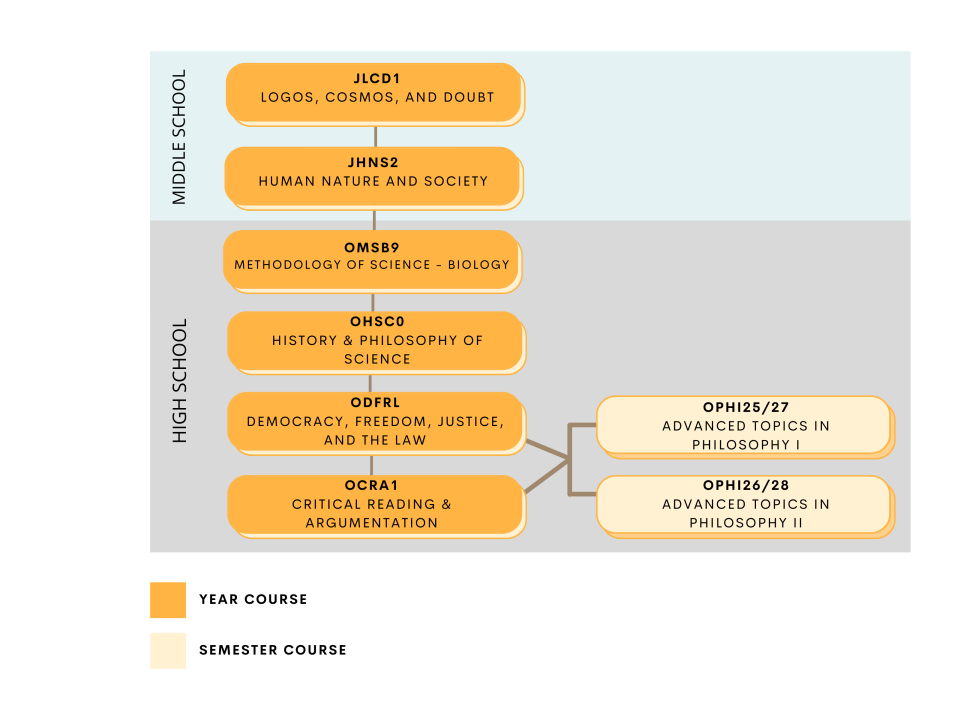
Democracy, Freedom, Justice, and the Law (ODFRL) or placement assessment